What Goes Into Making Real-Deal Prosciutto di Parma PDO
Story by Susan Sherrill Axelrod · 376 readers
Centuries of knowledge and tradition are key to producing the “King of Hams.” The post What Goes Into Making Real-Deal Prosciutto di Parma PDO appeared first on Saveur.
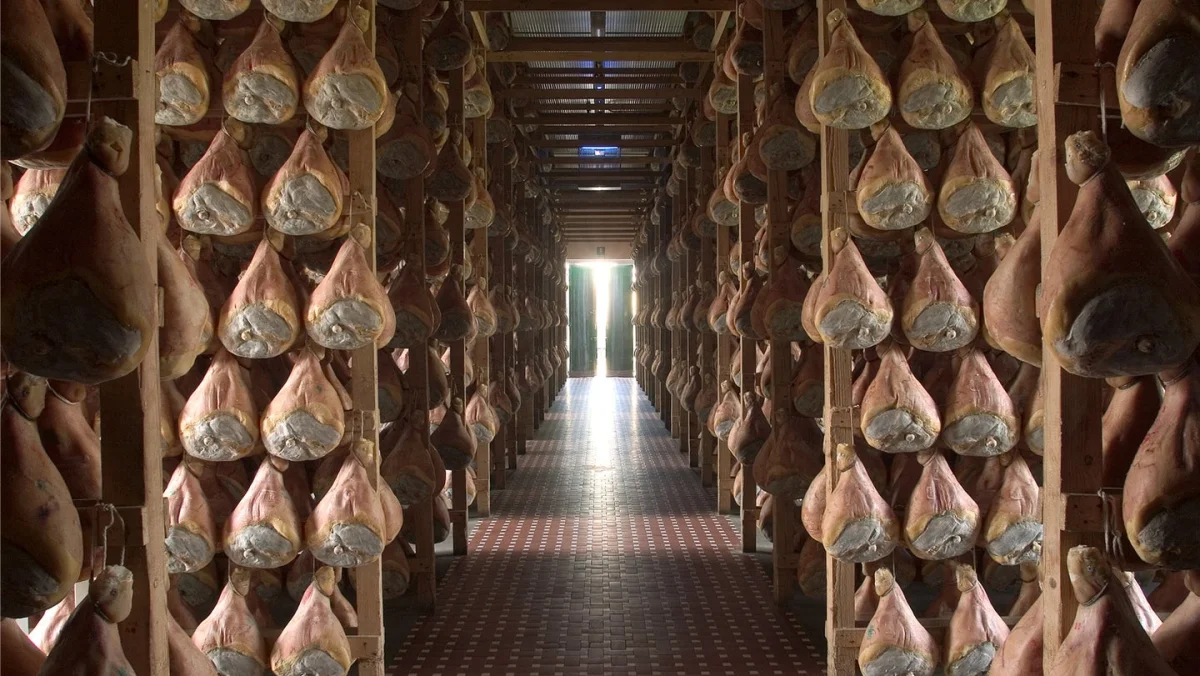

There are precious few food products that have been enjoyed for as much of human history as Prosciutto di Parma. The signature silky texture and buttery, sweet-savory flavor of the “King of Hams” is recognized around the world as the result of carefully controlled production methods, dedication to quality, and traditions continued for centuries.
The history of Prosciutto di Parma reaches back more than 2,000 years, to Roman times, when the art of preserving pork through salting and natural drying was already well established in the Po Valley. As early as the 3rd century BC, Cato the Elder described methods for curing pork legs with salt and allowing them to dry and mature. Today, Prosciutto di Parma is produced exclusively in a strictly defined area of northern Italy, in the province of Parma in the Emilia-Romagna region, where local know-how combines with distinctive climatic conditions. Humid breezes from the Tyrrhenian Sea become drier as they flow over the Apennines and down onto the hills. Prosciutto producers discovered that this created an ideal environment for dry aging, and they built storerooms with tall windows that could be opened and closed as necessary, allowing the air to circulate through the racks of hams for gradual drying.
The specifics of aging, like every step in the process, are governed by a consortium—the Consorzio del Prosciutto di Parma—that was founded in 1963 to protect the authenticity of the product. In 1996, Prosciutto di Parma obtained the European Union’s Protected Designation of Origin (PDO). These have a red and yellow seal to show that a product is made in a certain geographical area using time-honored, traditional methods. Grana Padano, a nutty, aged hard cheese also from Northern Italy that’s often paired with Prosciutto di Parma on a charcuterie plate, was awarded a PDO the same year.
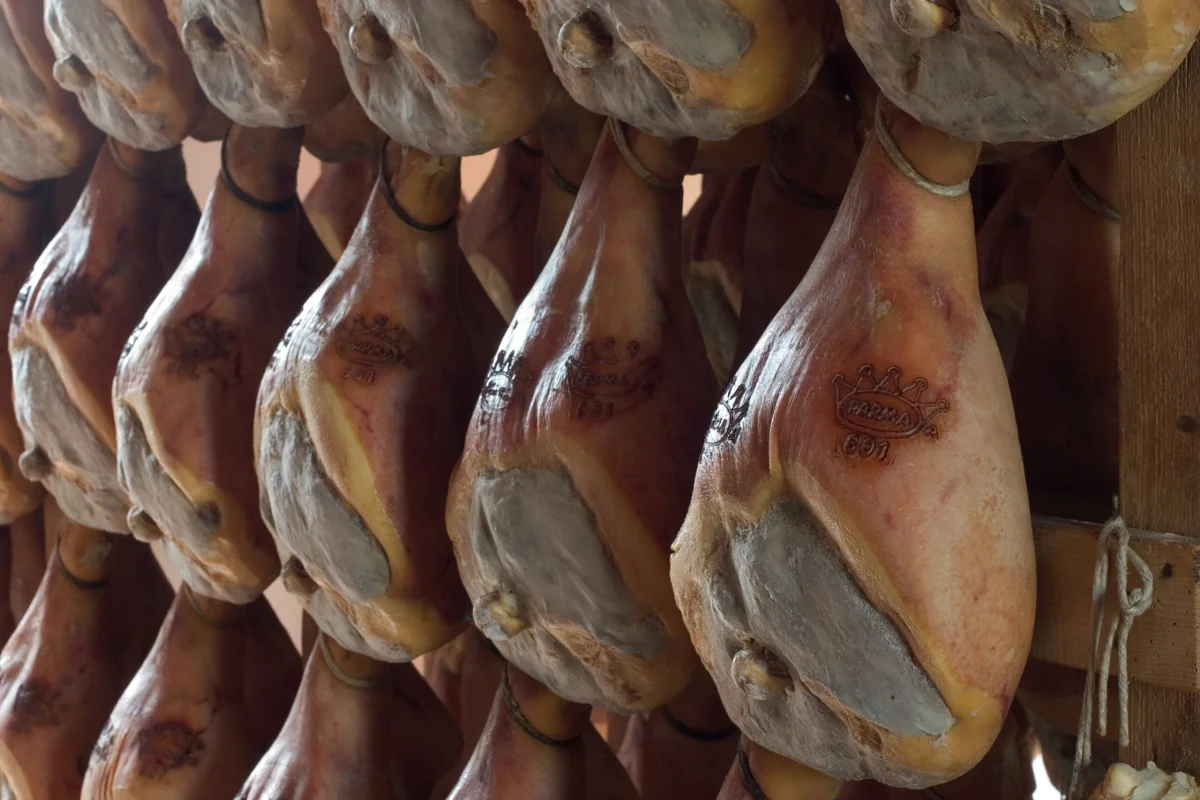
Grana Padano PDO and Prosciutto di Parma PDO also share the distinction of being fire-branded—a sign for consumers that you are buying the real thing. Only Parma hams that meet the PDO’s specifications can receive the five-pronged Ducal Crown that signifies a true Prosciutto di Parma.
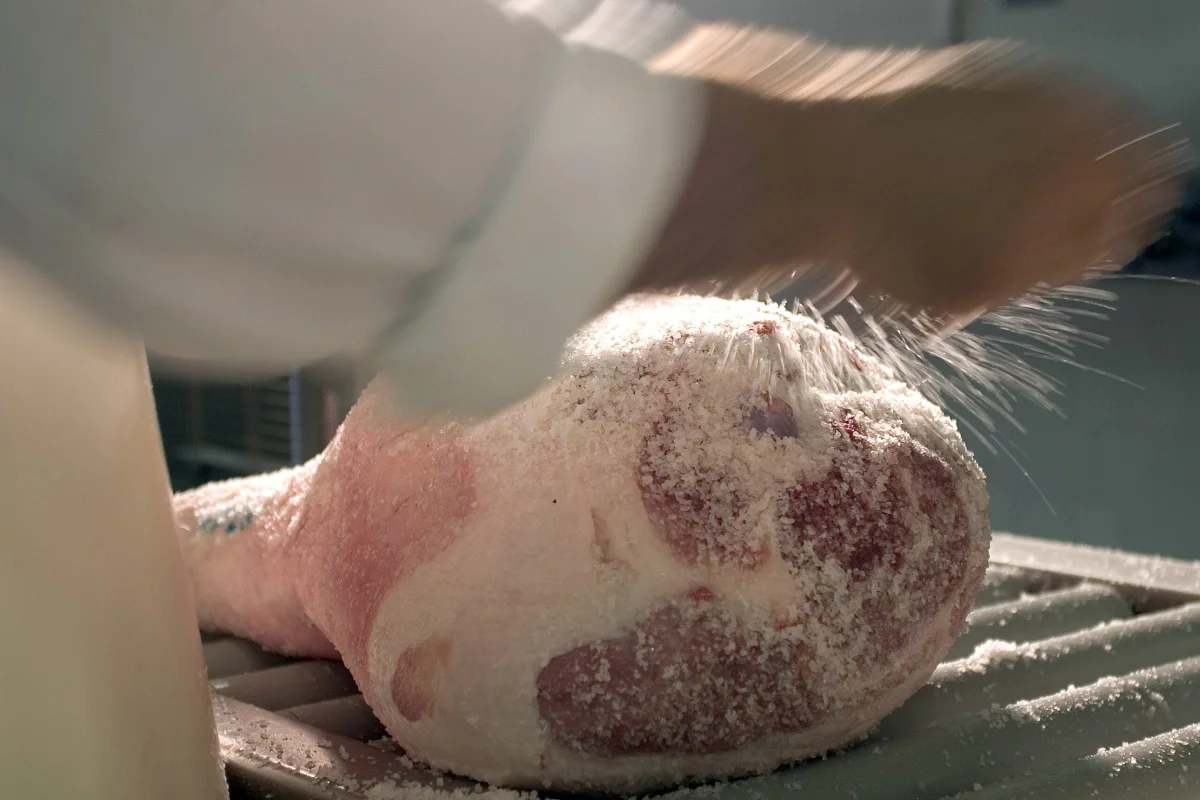
Well before that brand is applied, production starts with the pigs. Which breeds, where they can be bred and raised (in 11 Italian regions), and what they are fed (a list that also includes whey from local cheesemakers) are all precisely detailed. Within the 28th day from birth, the piglets receive a breeder tattoo that will also appear on the final product along with the crown brand. The fresh pork (hind legs only) sent to prosciutto producers must weigh between 26 pounds and 40 pounds, with a set amount of fat coverage. After they arrive at the production facility, the legs are trimmed to form the characteristic rounded shape, chilled to a precise temperature, and salted by hand with sea salt, which joins the pork as the only two ingredients that go into the making of Prosciutto di Parma PDO.
Following a resting period of at least 90 days, the hams are washed then hung in windowed storerooms to dry slowly. The next step is called sugnatura: The parts of the ham not covered by rind are rubbed with sugna—a mixture of pork fat, salt, and pepper—to keep the meat from drying too quickly. For final aging, the hams hang in cool, dimly lit cellars. From start to finish, the process cannot last less than 14 months (many producers continue aging for 24, 30, or even 36 months and beyond). The last step before inspection may be the most fascinating: The hams are tested using a needle made from horse bone, selected because the bone is able to absorb the aroma and quickly shed it. By inserting the needle into different parts of the cured meat and smelling it, experts can determine if a whole ham leg has the qualifications to be named Prosciutto di Parma PDO.
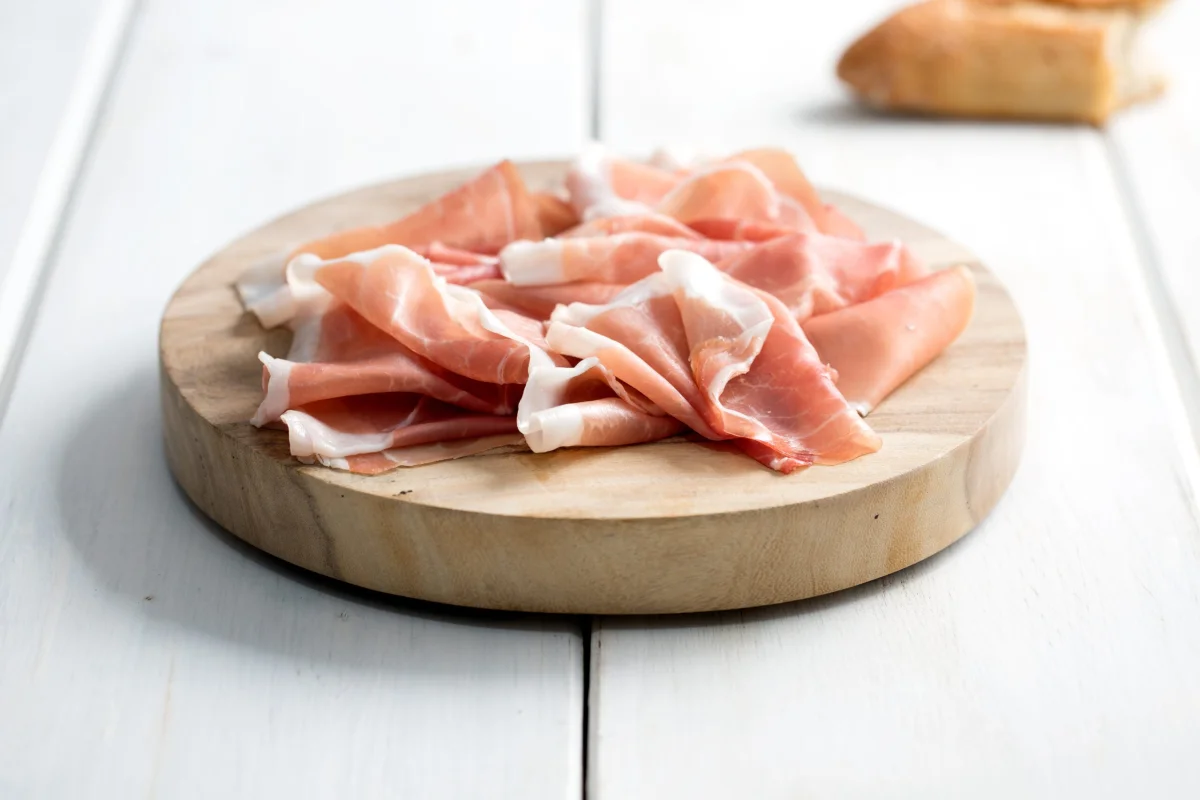
The Consorzio, which started with 23 producers, now numbers 125, and in 2025 they turned out 6.75 million Prosciutto di Parma PDO hams. Beyond its economic significance to the region, the “King of Hams” is a cultural icon and a tourism magnet. The annual Parma Ham Festival is held in September, and there’s even an entire museum dedicated to the region’s signature product—with a tasting room, of course.
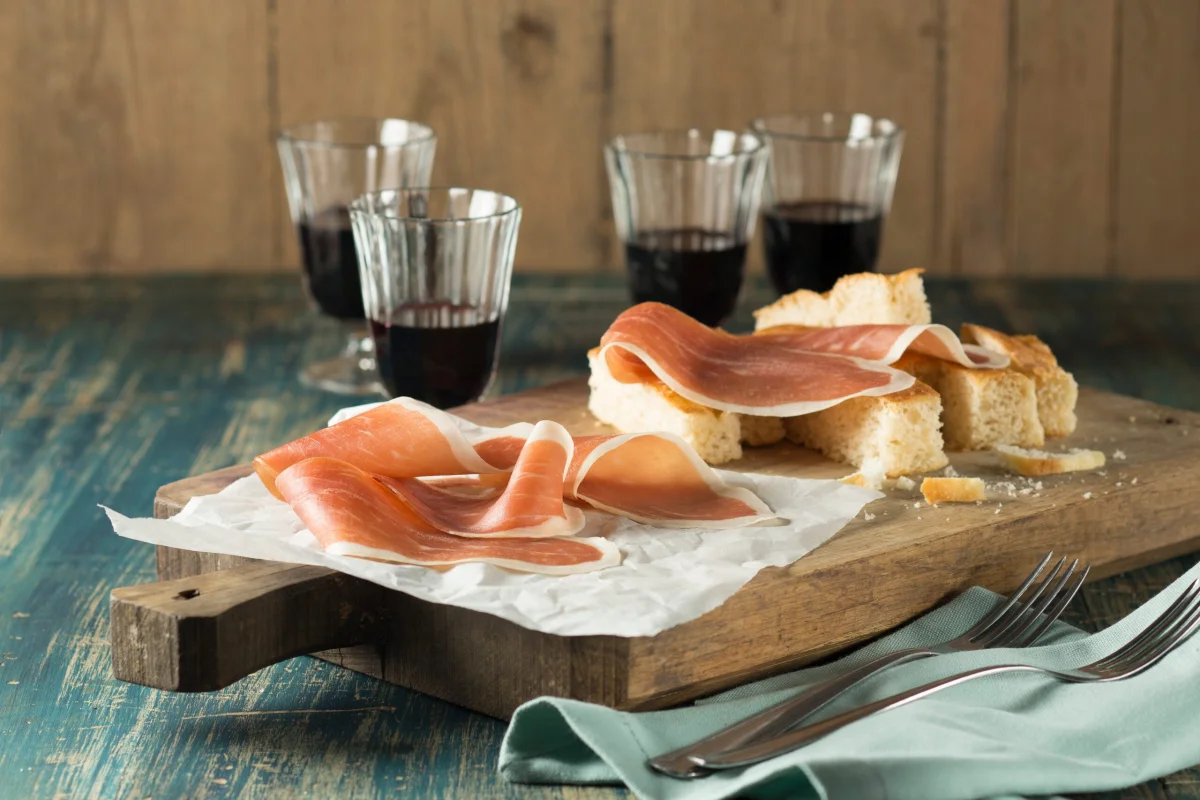
However you experience the exceptional flavor and texture of Prosciutto di Parma—on a visit to the museum or from your local specialty store—look for the crown and PDO seal, and take a moment to remember that you are tasting a distinctly delicious slice of history.
Head to DistinctlyDeliciouslyEuropean.eu to learn more about Prosciutto di Parma PDO and Grana Padano PDO.
Funded by the European Union. Views and opinions expressed are those of the author(s) only and do not necessarily reflect those of the European Union or of the granting authority. Neither the European Union nor the granting authority can be held responsible for them.
The post What Goes Into Making Real-Deal Prosciutto di Parma PDO appeared first on Saveur.