Yucatán’s Mukbil Pollo: Earth-Baked Tamales for Janal Pixán
Story by Sam O’Brien · 846 readers
Smoky mukbil pollo anchors Yucatán’s Janal Pixán, where cooking, family memories and hospitality give the tamale meaning beyond its flavor.
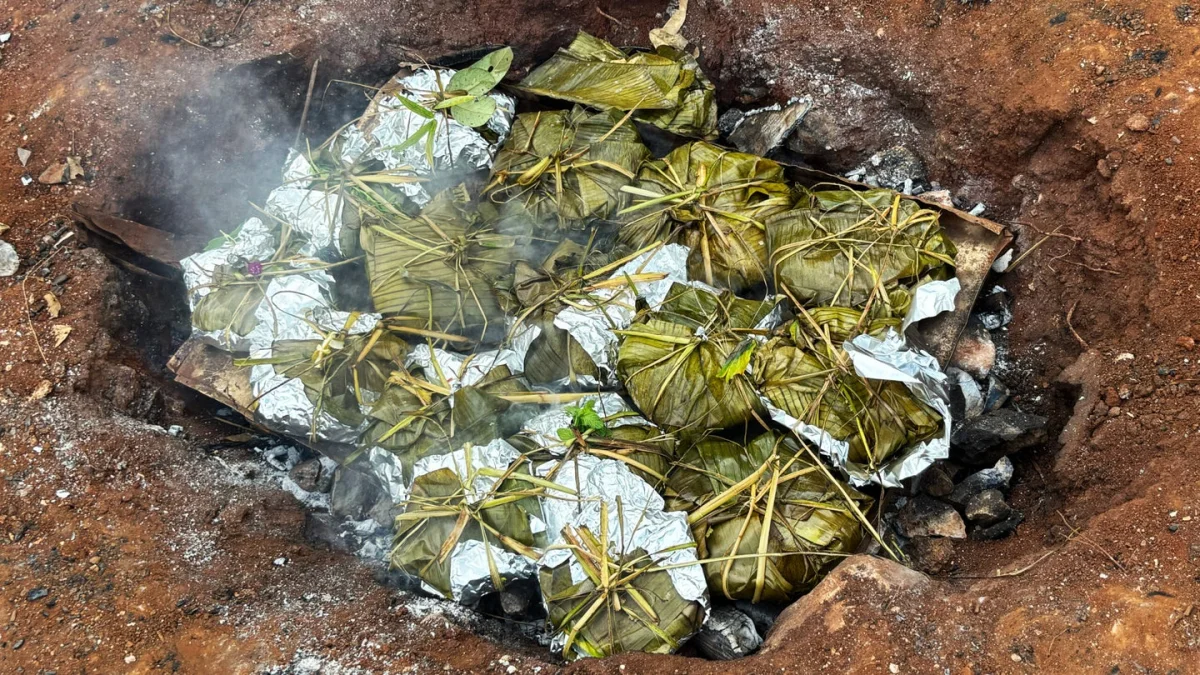

In Halachó, Yucatán, chef Wilson Alonzo judges a tamale by more than its golden crust. He digs through a mound of earth, branches and leaves to uncover a banana-leaf-wrapped disc from an underground oven. The tamale is ready for the altar—and for the visitors it’s meant to welcome.
That dish, mukbil pollo, is the centerpiece of Janal Pixán, the Yucatán Peninsula’s observance for the returning souls of the dead. Its name means “buried chicken”; the holiday’s name translates from Yucatec Maya as “Food for the Souls.” Families welcome children on October 31, adults on November 1, and all spirits on November 2, then hold a farewell meal eight days later—or, in some cases, after 30 days. Other foods may appear on the ofrenda, from hot chocolate and relleno negro to beer, but mukbil pollo takes pride of place.
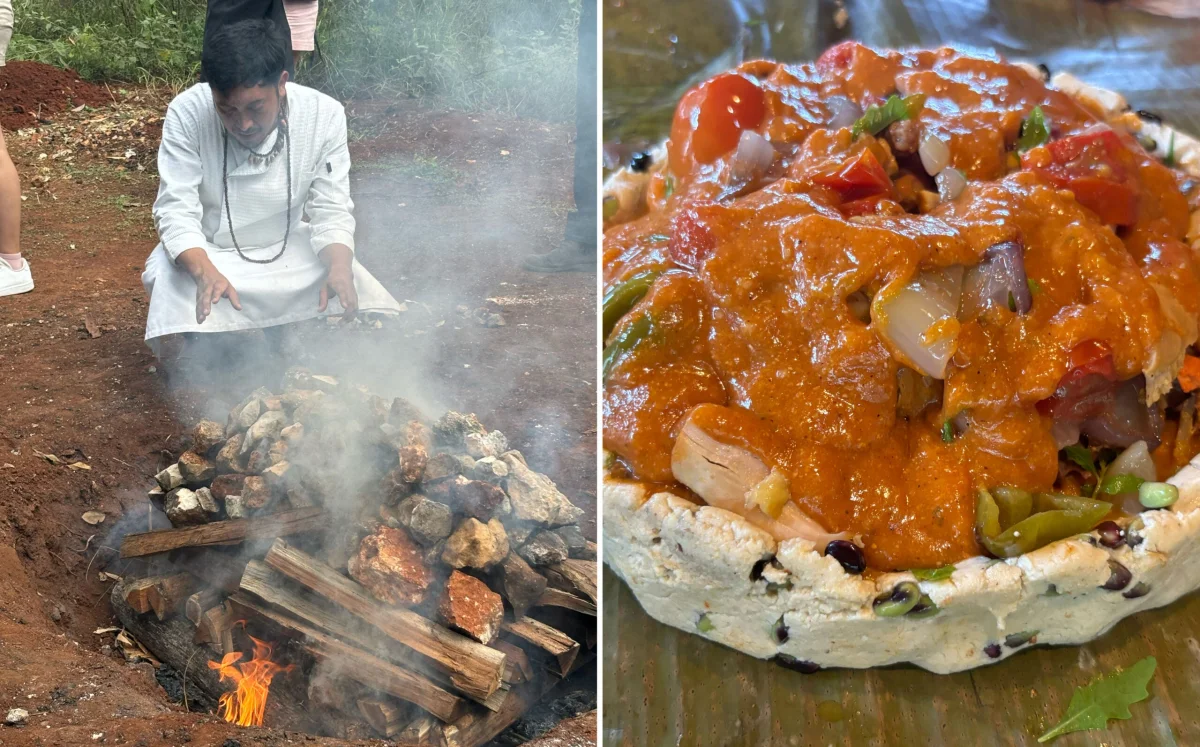
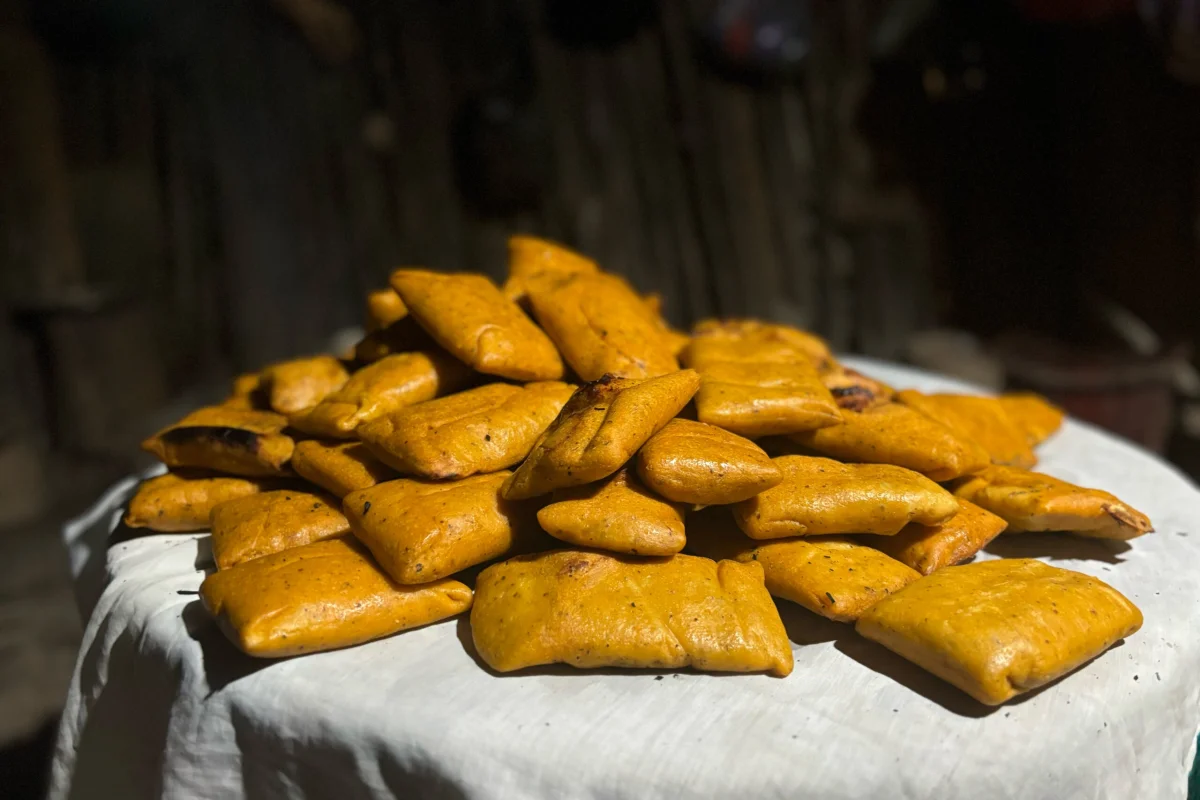
Alonzo, whose restaurant Ya’axche specializes in traditional Yucatecan food, describes the tamale as the offering’s highlight. Its appeal is vivid: a crisp, caramelized layer of masa enriched with lard gives way to smoky chicken in a crimson broth of achiote, tomato, sweet and spicy peppers, epazote, onion and garlic.
For the souls, though, the point is the aroma. Alonzo says they take in the food by its scent, and the píib—the traditional earth oven—is what gives that scent its character. Wood, heated stones and leaves lend a gently herbaceous smokiness to mukbil pollo, also called pibipollo or pib, as well as to cochinita pibil. “Cooking it in a gas oven simply isn’t the same,” he says. “You lose the unique aromas and flavors imparted by the earth itself.”
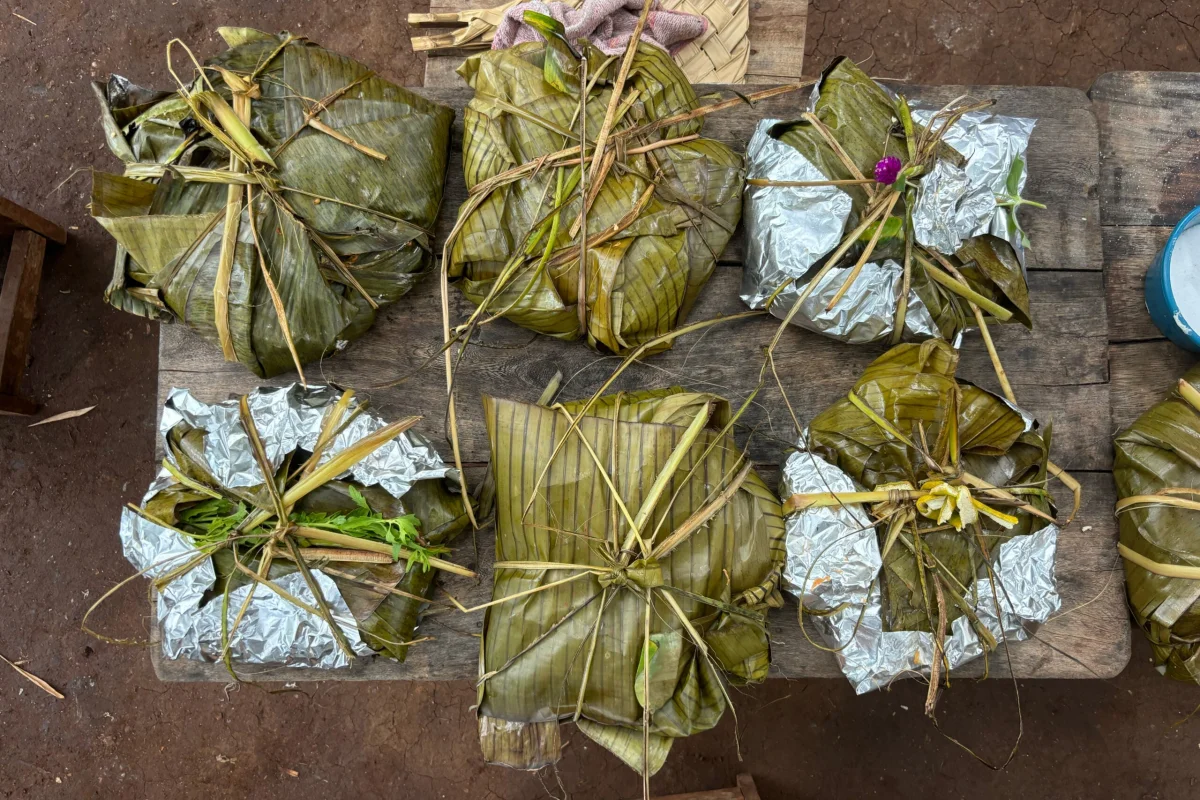
The earth oven matters deeply to some cooks, but it isn’t a requirement everywhere. In cities, limited outdoor space often means the tamales go into indoor ovens. Steffan Igor Ayora-Díaz, a retired anthropologist who grew up in Valladolid, remembers his mother preparing mukbil pollo at home and taking it to a local bakery for baking. In his family’s experience, nobody insisted that the dish had to cook in a píib.
A tradition with room to change
Ayora-Díaz now lives in Mérida, where he sees Janal Pixán observed in a more secular way. Many people skip the píib and don’t set up ofrendas; instead, they gather with family over a meal. Mukbil pollo remains the seasonal dish, he says, but in those settings it can function much like turkey at Thanksgiving: food people expect to eat, without necessarily thinking of the dead as they do so.
That shift sits alongside a longer history of adaptation. The Maya have used píibs and made tamales for millennia, but garlic, onions and lard arrived with the Spanish in the 1500s. Ayora-Díaz says mukbil pollo appears in written records only from the 1900s. He calls it a traditional dish with quotation marks: a food rooted in old techniques and practices, yet shaped over time by newer ingredients.
Janal Pixán also brings Maya beliefs about ancestors into conversation with Christian observances for All Saints’ Day and All Souls’ Day. In Xocén, a village with a largely Yucatec Maya population about 20 minutes from Valladolid, families may pray for souls at Catholic mass and welcome them at home with the same generosity they would offer living guests.

Yucatec Maya guide Miguel Tun says the welcome extends beyond the meal. Spirits are regarded as visitors who deserve respect and particular observances. Homes and yards are cleaned in preparation, he says, so that everything is ready for their arrival.
A tamale made for the journey
Tun’s family, like many in Xocén, makes tamales for the biix, the eighth day of Janal Pixán, when souls are believed to return to purgatory. Their local version is chachak waaj, or “red tamale”: a small, hand-pie-shaped parcel. Its compact form suits the occasion. Tun explains that souls can carry it easily, like a parting gift given to a visitor setting out on a journey.
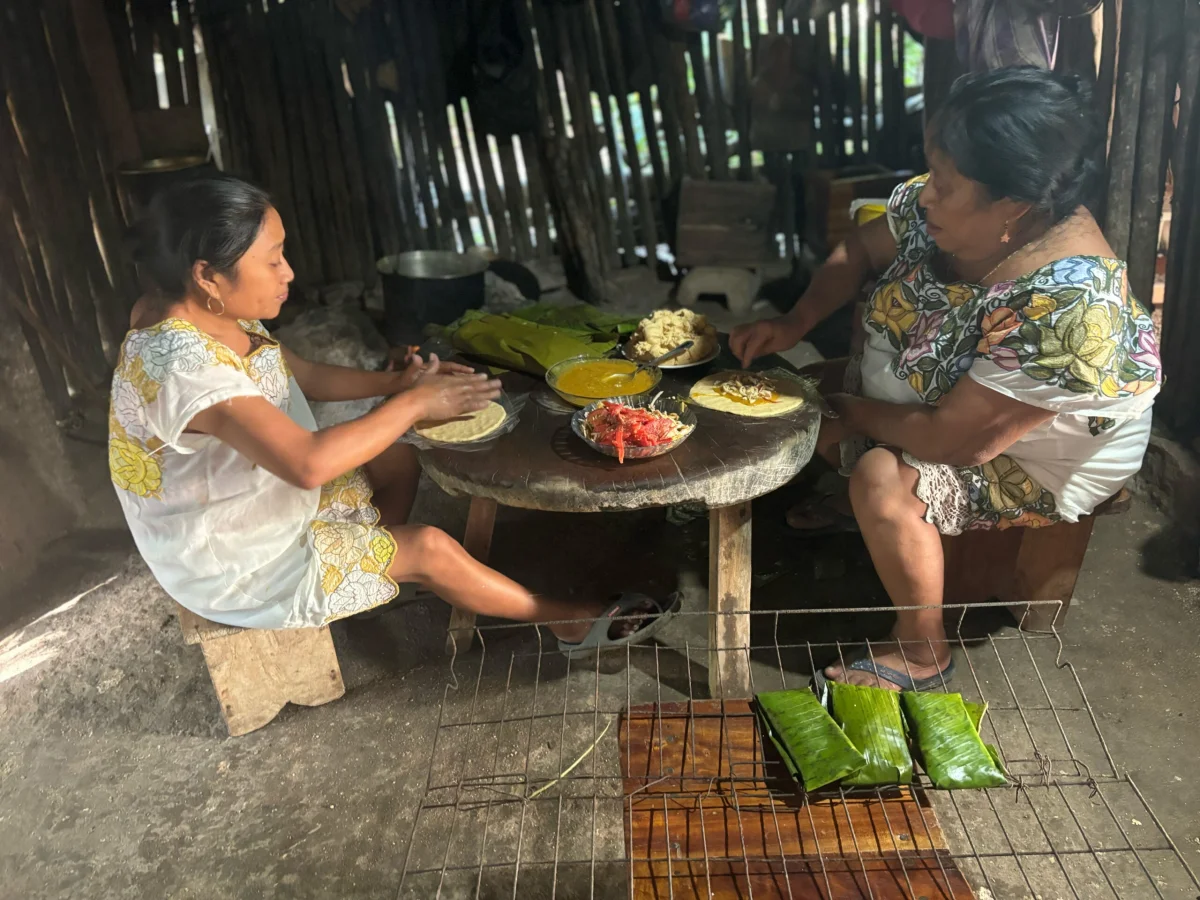
Making that gift takes the family most of a day. During a visit, Tun and his relatives shred chicken, slowly cook the sauce, work manteca—rendered pork lard—into masa, assemble the tamales and wrap them in banana leaves. By the time they take the parcels to the backyard píib, it’s dark enough to need headlamps.
For Tun, the work is part of what makes the offering meaningful. Preparing it takes time and effort, a commitment that carries significance within the Maya worldview. The hours together also open space for memories: while mixing, kneading and assembling, relatives talk about everyday community life and recall things a deceased family member once said or did.
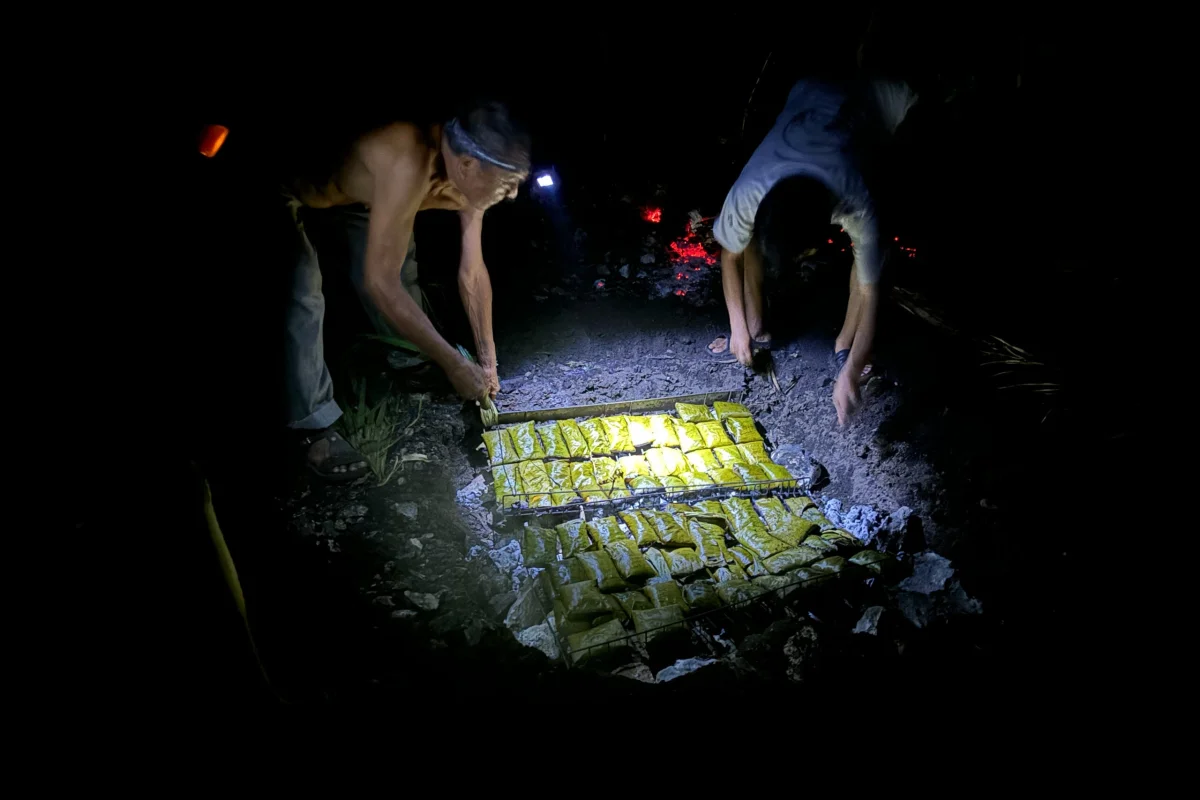
At 9:30 p.m., Tun and his father bring out trays from the oven. Cousins and an aunt join them on plastic chairs and tree stumps to unwrap the tamales and inspect their crusts. Parcels that aren’t crisp enough go back into the píib. Charred leaves scatter underfoot as the family chats about an upcoming dance recital.
That gathering, Tun says, holds the deepest meaning of Janal Pixán for him. The family shows that it remains united, so that a returning loved one can find everyone together. Mukbil pollo carries the aroma of the earth oven, but its preparation carries something else: time spent remembering, cooking and making room for one another.