At-Home Espresso Turns Coffee Making Into a Hands-On Hobby
Story by Anna Hezel · 576 readers
From accessible machines and online tutorials to specialty beans, home espresso is growing into a creative coffee culture of its own.

Home espresso has become a hobby built around a useful contradiction: people can buy machines that automate much of the work, then spend time learning to adjust the parts that remain. The appeal goes beyond recreating a café order. For many home baristas, the grinder, steam wand and portafilter turn a daily drink into a small, satisfying practice.

From café habit to kitchen project
Five years ago, Katerina Diaz began questioning the value of her $8 Starbucks drinks. She calculated that a $600 espresso machine could still leave her more than $1,000 ahead each year. After buying a Breville, she started sharing homemade versions of familiar café drinks on Instagram, including brown sugar shaken espressos and raspberry cold foam. That experimentation led to her new cookbook, Coffee Shop at Home.
Diaz’s experience reflects a wider shift from drip coffee makers and pod machines toward espresso setups that invite customization. The range now stretches from approachable machines to a $1,600 model that guides users through making a shot on a small screen. For newcomers, that combination of instruction and equipment lowers the barrier to trying drinks such as cappuccinos, banana bread lattes and pistachio cortados.
Online instruction has changed the learning curve, too. A decade ago, latte art could seem like a skill reserved for trained café staff. Now, home baristas can follow baristas on TikTok and practice with dairy milk or grocery-store oat, pistachio and macadamia “barista blends.” More consumers are also buying whole-bean coffee, while specialty roasters make it easier to find freshly roasted beans suited to a particular taste.
Beans, equipment and a growing library of advice
Subscriptions can help connect a home setup with beans that suit it. The author describes using Trade, which asks about a customer’s equipment and preferred brewing method before arranging deliveries from roasters including ReAnimator and Atomic. Trade coffee director Maciej Kasperowicz says about a third of the company’s new subscribers so far this year are espresso drinkers, around 20% more than in 2024. The company has also added an espresso section with a tool for dialing in shots by adjusting grind, brew ratios and timing to suit the beans.
When Diaz began posting in 2021, she found guidance from early online coffee educators James Hoffmann and Morgan Eckroth, whose work helped her choose a machine and get started. Eckroth’s book, Coffee, for Here, is due in October alongside Diaz’s book. It extends the competitive barista champion’s video lessons with techniques such as freeze-distilling milk to concentrate its fats and sugars, and steaming iced espresso into a fluffy aerocano.
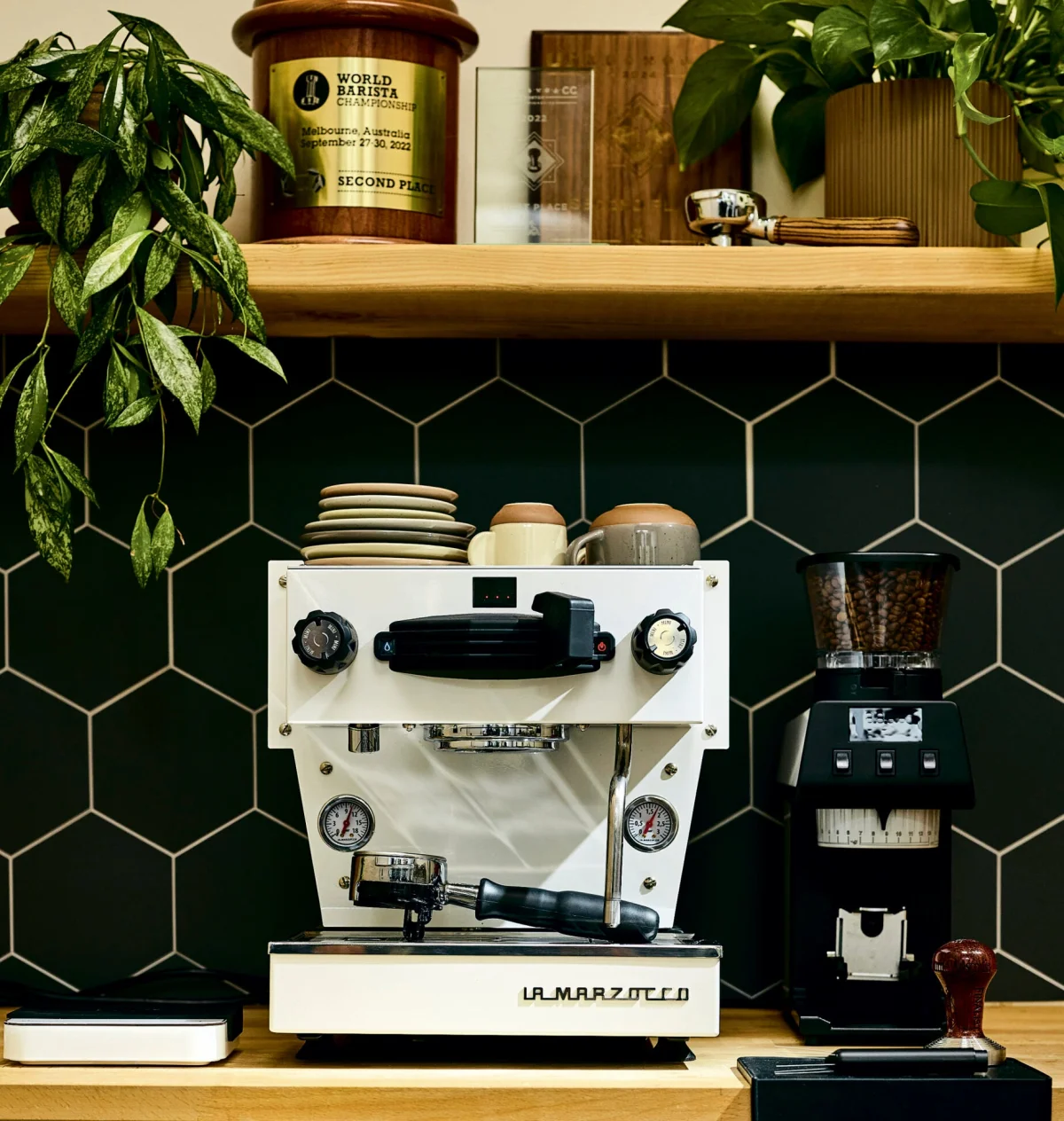
Photo: Eric Medsker
Both Diaz and Eckroth started with the Breville Barista Express. Introduced in 2009 for $599.95, it became the company’s most popular model. Its integrated burr grinder and buttons that portion single or double shots offer a practical entry point. Breville has since added machines with more automation, including the Barista Touch, with customizable drinks on a touchscreen, and the Oracle Jet, which switches between automatic operation and a more hands-on mode.
Ben Gleeson, Breville’s senior global category manager for espresso, says demand in the United States rose sharply during COVID and has continued to grow year over year. “Right now, automatic machines are in strong demand,” he says. SMEG, De’Longhi and Fellow have also entered the category with compact semiautomatic machines priced below $2,000, aimed at people exploring espresso for the first time.
Learning the craft at home
Eckroth traces the surge in coffee content to mid-to-late 2020, when café closures shifted more coffee making into people’s homes. At the time, they worked at Tried & True Coffee Co. in Corvallis, Oregon. When the café closed temporarily, they bought a used, refurbished Barista Express and began learning at home.
They recall coffee workers translating their knowledge for online audiences, building a deep, searchable collection of lessons. That knowledge now spans practical troubleshooting and playful experiments. Looking for bear-shaped latte art? There’s a TikTok for that. Want to recreate an iced pumpkin cream shaken espresso? Recipes are easy to find. Some creators even put butter or Reese’s peanut butter cups in portafilters to film the results. Cleaning those filters gets less attention.
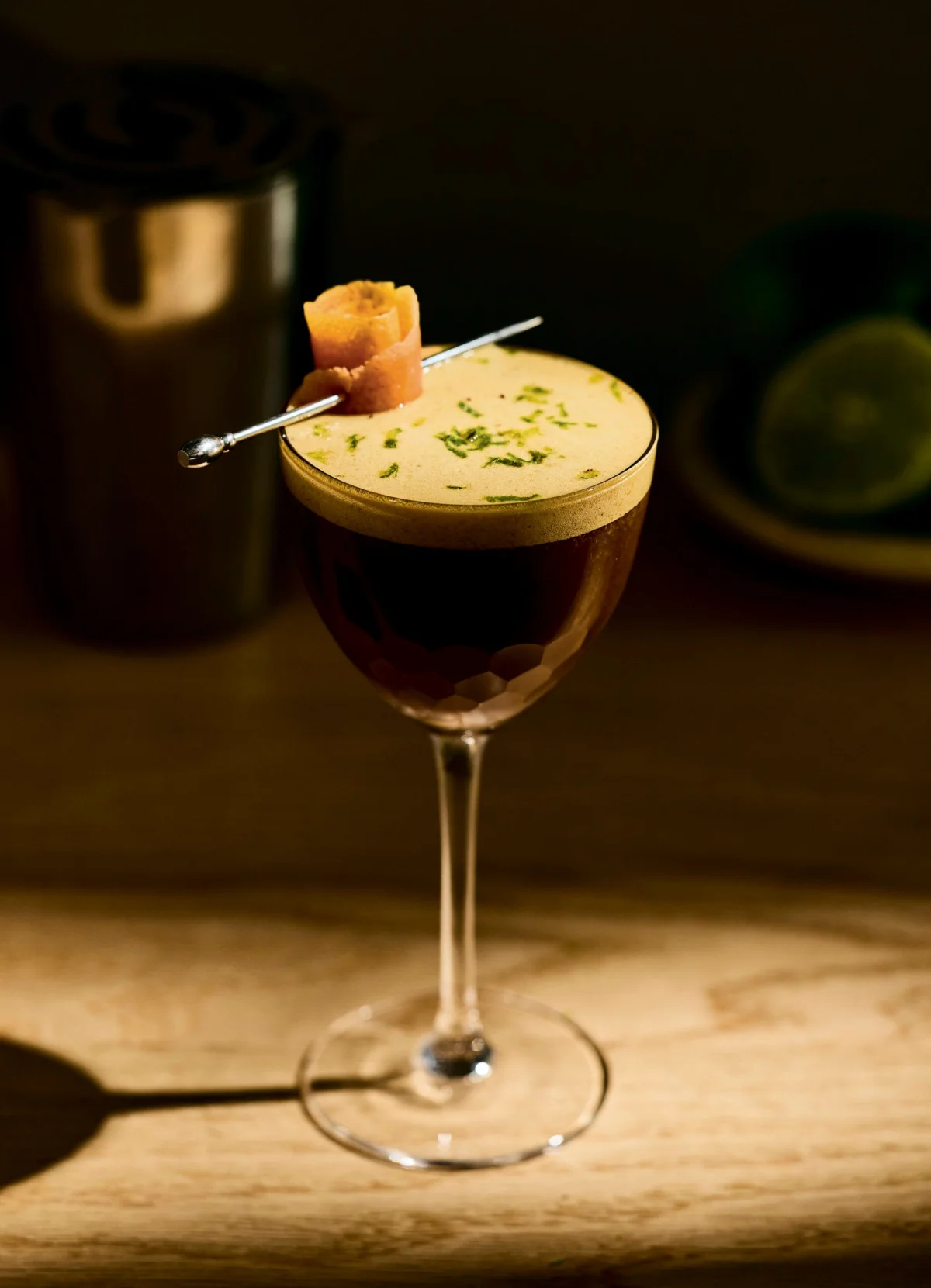
Photo: Eric Medsker
That imbalance hints at what owning a machine really involves. Automation can make dosing and drink settings simpler, but baristas still need to clean portafilters, adjust grinders and descale water tanks. The learning curve—and the maintenance—are part of the commitment.
The pleasure of a little friction
Jordan Michelman, cofounder of coffee publication Sprudge, sees the appeal in that effort. “The age of frictionless automation is precisely why people—or at least some people—care so much about the deeply analog, inherently imperfect things that make life interesting,” he says. A drink made at home can be tailored to the person making it, then changed the next morning with a new bean, milk or technique.
Eckroth is cautious about putting a firm label on what comes after third-wave coffee, since such shifts tend to become clear in retrospect. Still, they see the ability to make excellent coffee at home—sometimes better than what’s available in cafés—as a sign of a new generation of coffee culture. The machine may streamline the first steps, but the lasting pleasure is in learning what to adjust, and making the next cup your own.